


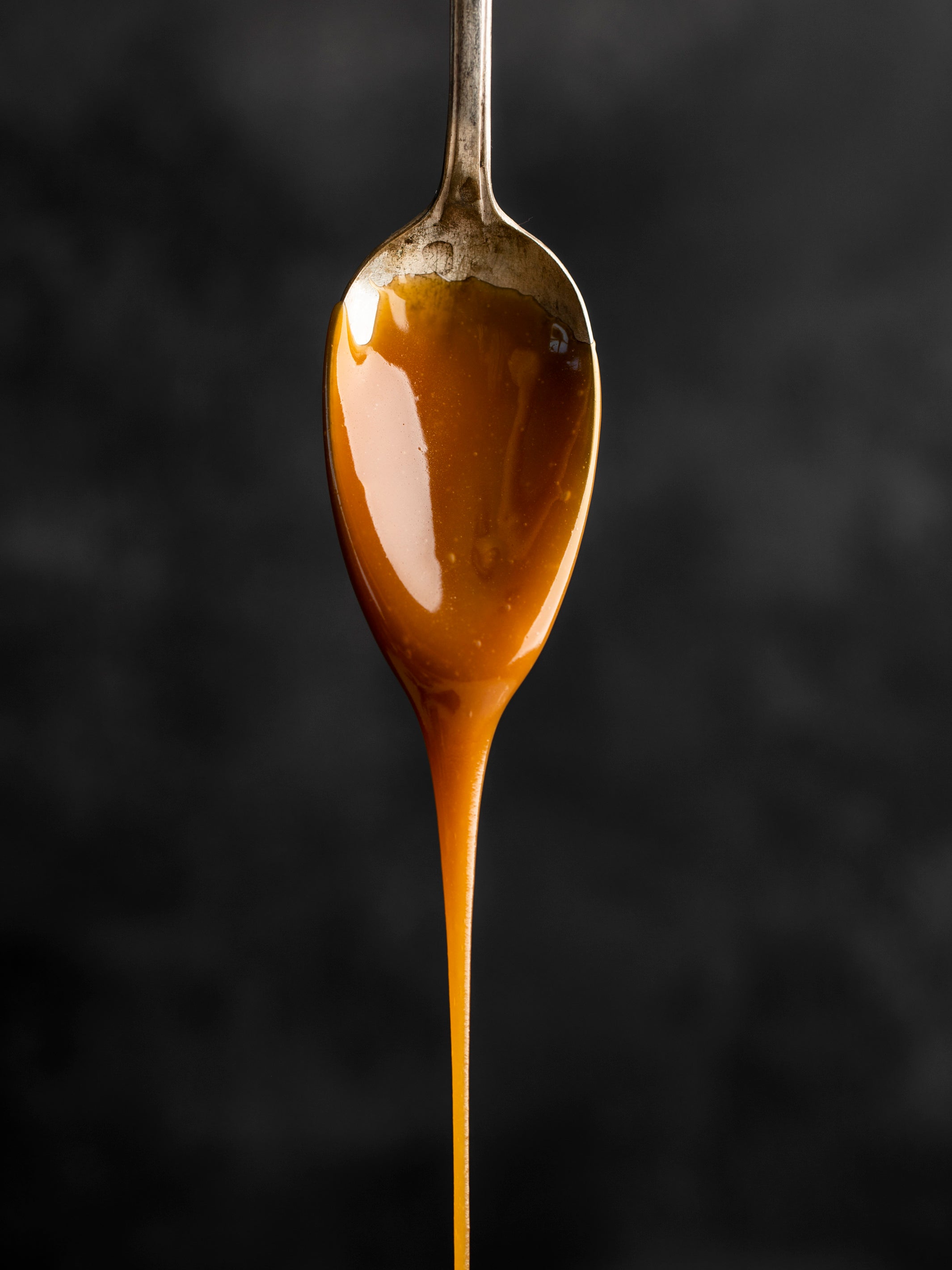


Caramelizing sugar is one of the most rewarding skills you can build in the kitchen. White granules, steady heat, and a few minutes of attention produce a rich, amber liquid at the heart of sauces, candies, and desserts.
The process comes down to two proven methods and a handful of sensory cues.
How to Caramelize Sugar (Quick Answer)
To caramelize sugar, heat it until it melts and turns amber.
- Wet method: Cook sugar with water, then let it boil without stirring until golden
- Dry method: Melt sugar directly in a pan, stirring gently as it liquefies
Remove from heat as soon as it reaches an amber color to avoid burning.
What Happens When Sugar Meets Heat
Caramelization is a series of chemical reactions triggered when sucrose reaches roughly 340°F (170°C). Sugar molecules break apart and recombine, producing new compounds responsible for deeper color, complex aroma, and bittersweet flavor. The visual shift moves from pale gold to amber to deep copper while a nutty, buttery scent fills the kitchen.
Your eyes and nose are the most dependable tools for judging readiness, not just a thermometer.
The Wet Method for Caramelizing Sugar
The wet method is the most forgiving approach and an ideal starting point for anyone asking how do I caramelize sugar without burning.
Sugar, Water, and a Slow Build
- Combine sugar and water (about 1/4 cup water per 1 cup sugar) in a heavy-bottomed saucepan.
- Stir gently over medium heat until every crystal dissolves.
- Once the solution reaches a boil, stop stirring completely.
- Allow the water to evaporate as the temperature climbs.
- When the syrup shifts from clear to golden amber, remove the pan from the heat immediately.
The water acts as a buffer, giving you extra time to observe color changes before the sugar darkens too quickly.
The Dry Method for Caramelizing Sugar
The dry method skips water entirely, so speed is the defining advantage.
Pure Sugar, Direct Heat
Sprinkle a thin, even layer of granulated sugar across the bottom of a heavy pan and set the heat to medium. As the edges melt, gently drag unmelted crystals into the liquid using a heat-safe spatula. Avoid aggressive stirring. Once fully melted, the sugar turns amber in seconds, so stay close and pull the pan off the heat at the right color.
No water means no evaporation time, and the process can finish in under five minutes.
Wet vs. Dry Method at a Glance
|
Factor |
Wet Method |
Dry Method |
|
Difficulty |
Beginner-friendly |
Intermediate |
|
Speed |
10 to 15 minutes |
3 to 5 minutes |
|
Control |
High, slower color change |
Lower, fast browning |
|
Crystallization Risk |
Moderate (avoid stirring after boiling) |
Low |
|
Burn Risk |
Low |
Higher |
|
Best For |
Sauces, syrups, flan |
Crème brûlée, brittle, spun sugar |
Pro Tips for Flawless Results
- Use a heavy-bottomed pan: Even heat distribution prevents hot spots that scorch sugar before the rest melts.
- Never stir after the boil (wet method): A gentle swirl of the pan is enough to keep things even.
- Judge by color, not temperature alone: A few degrees can separate golden perfection from bitter char.
- Act fast once you hit amber: Residual heat continues cooking sugar after you remove the pan. Pour or use the caramel right away.
How to Make Caramel Syrup from Caramelized Sugar
Once sugar reaches a rich amber stage, carefully pour in warm cream or warm water. Cold liquids cause splattering, so always warm them first. Stir over low heat until smooth, then add butter and a pinch of salt to round out the flavor.
A finish of Celtic Sea Salt® adds mineral complexity that balances sweetness beautifully. That same principle is why a salted caramel candy made with all-natural ingredients tastes so different from mass-produced alternatives.

Pairing caramelized sugar with quality caramel sauce or rich butter caramel starts with mastering exactly these fundamentals.
The Sweet Payoff
With practice, caramelizing becomes less about rigid steps and more about reading the cues, the color shift, the rising aroma, and the smooth texture forming in the pan.
Once you have the technique, you can steer your caramel toward butterscotch varieties, fold in dark chocolate for layered richness, or finish with Celtic Sea Salt® for a balanced, sophisticated treat.
Frequently Asked Questions
1. How do I fix crystallized sugar during caramelization?
Add a small amount of warm water back into the pan and reheat gently. The crystals will dissolve, letting you restart without wasting the batch.
2. What is the difference between caramelized sugar and caramel candy?
Caramelized sugar is pure sugar heated until brown. Caramel candy adds dairy, butter, and often salt, creating the smooth, chewy texture found in small-batch confections.
3. Why did my caramel turn bitter?
Sugar went past the amber stage into dark brown or black territory. Residual heat in the pan continues cooking even after you remove it from the burner, so pull the pan off a shade earlier than your target color.
4. Can I use a non-stick pan to caramelize sugar?
A heavy-bottomed stainless steel or uncoated pan works best. Non-stick coatings can degrade at the high temperatures caramelization requires, and they make it harder to judge color changes accurately.
5. How should I store caramelized sugar?
Pure caramelized sugar hardens as it cools and absorbs moisture quickly. Store it in an airtight container at room temperature and use it within a few days for the best texture and flavor.
6. Does the type of granulated sugar matter?
Cane sugar and beet sugar both caramelize well at the same temperature. The results are nearly identical in color and flavor, so use whichever you have on hand.
7. Why is my sugar not caramelizing?
Sugar requires sustained heat above 340°F (170°C) to caramelize. If it is not browning, heat is too low, the pan is too thick to conduct evenly, or moisture is preventing temperature from rising. Use medium heat and a heavy-bottomed pan.
8. At what temperature does sugar caramelize?
Sugar begins to caramelize at approximately 340°F (170°C). Below this threshold the sugar melts but does not brown. Color shifts from pale gold to amber to deep copper as temperature rises and flavor compounds develop.