




The sweetener in caramel does more than add sweetness, shaping texture, controlling the chew, and influencing whether the final bite feels clean or overly sticky. When you compare tapioca syrup vs corn syrup, the differences start at the ingredient source and carry all the way through to your palate.
Most mass-produced caramel relies on corn syrup as a base sweetener. Caramel made with tapioca syrup offers a smoother mouthfeel and a neutral sweetness that lets butter, cream, and brown sugar take center stage. Once you know what separates the two, choosing small-batch caramel worth savoring becomes much easier.

How Tapioca Syrup and Corn Syrup Compare in Caramel
Both syrups prevent sugar crystallization during cooking, which is essential for smooth caramel. But how they get there, and what they leave behind in terms of flavor and feel, is where the real differences emerge.
A Tale of Two Syrups
|
Factor |
Tapioca Syrup |
Corn Syrup |
|
Source |
Cassava root starch |
Corn starch |
|
Sweetness Profile |
Mild, clean, neutral |
Flat, one-dimensional |
|
Texture in Caramel |
Silky, smooth, less sticky |
Stickier, heavier body |
|
Flavor Impact |
Lets other ingredients shine |
Can mask delicate notes |
|
Common Use |
All-natural, small-batch confections |
Mass-produced candy |
Tapioca syrup acts as a supporting ingredient rather than a dominant one. In quality caramel, that distinction means the buttery richness and brown sugar depth come through without interference.
Is Tapioca Syrup Healthier Than Corn Syrup?
Many people asking whether tapioca syrup is healthier than corn syrup want a straightforward comparison. Both are caloric sweeteners, and neither qualifies as a superfood. The meaningful difference lies in ingredient simplicity.
Tapioca syrup comes from cassava root and offers a clean, simple composition. Corn syrup, particularly high-fructose varieties, has drawn scrutiny for its heavy presence in processed foods. For label-conscious shoppers, the swap from corn syrup to tapioca syrup signals a commitment to all-natural, more intentional ingredient choices. Not a health miracle, but a clear reflection of quality standards.
At Béquet, we made the transition in 2012 after testing alternatives. Tapioca syrup produced an even smoother, more satisfying caramel, and the switch was immediate. Every batch of award-winning gourmet caramel has used tapioca syrup since.
What Makes Corn Syrup-Free Caramel Candy Worth Choosing
Shopping for corn syrup-free caramel candy is easier once you know what matters on the label. Not every natural claim holds up under scrutiny.
Five Signs of a Caramel Worth Savoring
- A short ingredient list. Recognizable items like brown sugar, cream, butter, and tapioca syrup signal quality. A long list of additives does not.
- All-natural ingredients throughout. A clean sweetener swap only matters if the rest of the recipe follows the same standard.
- Certified gluten-free status. A credible certification means the manufacturer takes ingredient integrity seriously across the board.
- No artificial flavors or preservatives. Real caramel should taste like caramel, cream, and butter, nothing else.
- Earned recognition from blind-judged awards. Accolades based on taste, not packaging, offer the most honest measure of quality.
With 12 national awards, antibiotic-free dairy, and tapioca syrup in place of corn syrup, every Béquet variety, from salted caramel candy finished with Celtic Sea Salt® to soft butterscotch caramel, reflects that standard.
How the Right Sweetener Shapes Flavor and Texture
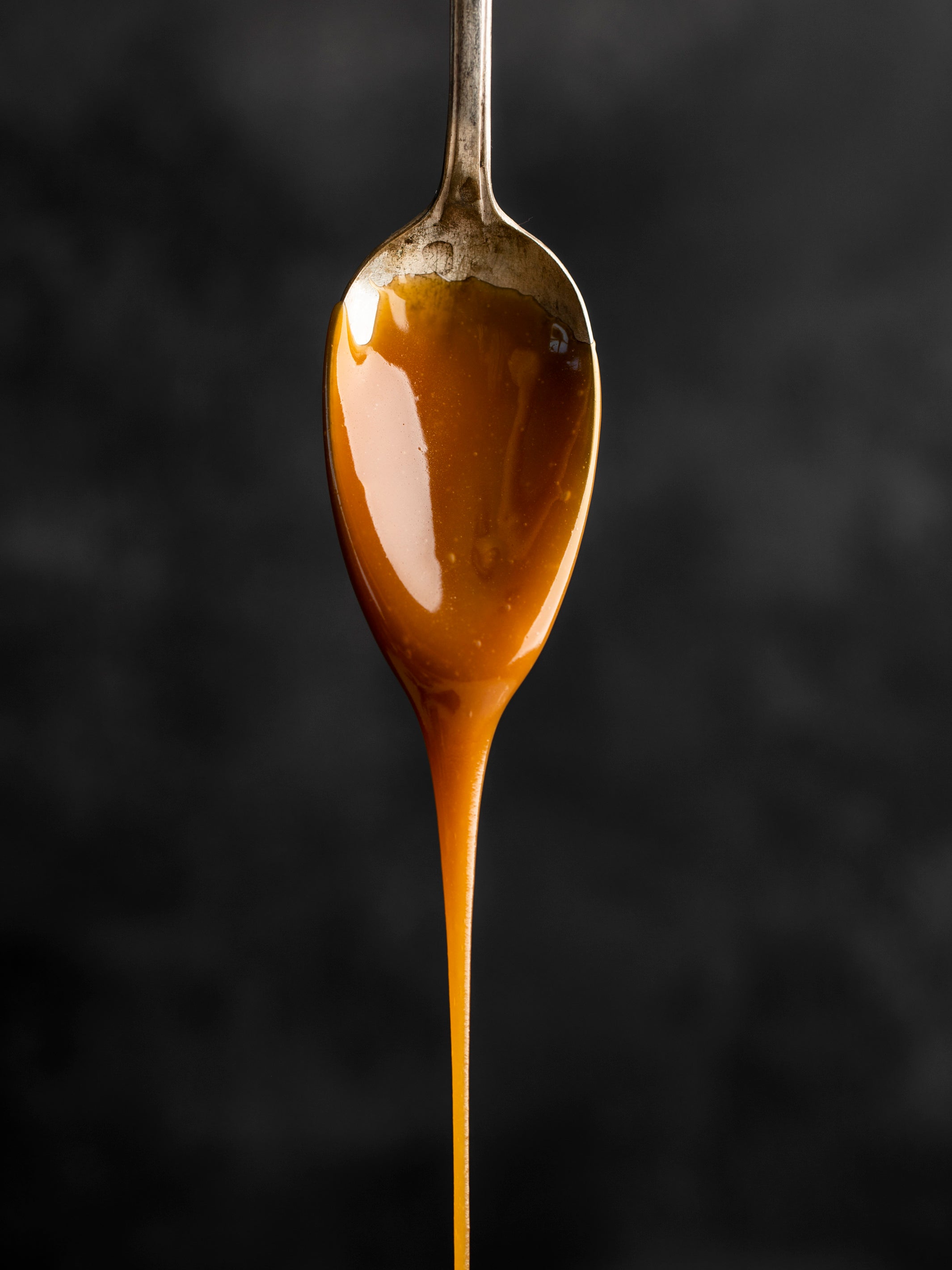
Watching caramel come together under steady heat is part of what makes the craft so satisfying. The syrup you choose affects how the caramel sets, how it pulls, and how flavor releases across the tongue.
Tapioca syrup creates a silken consistency that melts evenly. Corn syrup tends to produce a heavier, stickier result that clings rather than releases. In carefully crafted caramel, the difference is immediate: a smooth, buttery center with no waxy residue.
Every Béquet caramel, from our Celtic Sea Salt® variety to our layered Salted Mocha and gluten-free caramel options, uses tapioca syrup to achieve that balanced, creamy texture. Slow-cooked in Montana in small batches, each piece reflects the attention to craft that has earned 12 national awards.
Frequently Asked Questions
1. Does tapioca syrup taste different from corn syrup in caramel?
Yes. Tapioca syrup has a milder, more neutral sweetness that allows the butter, cream, and brown sugar to lead the flavor profile. Corn syrup tends to flatten the overall taste with a one-note sweetness.
2. Where can you buy corn syrup-free caramel candy online?
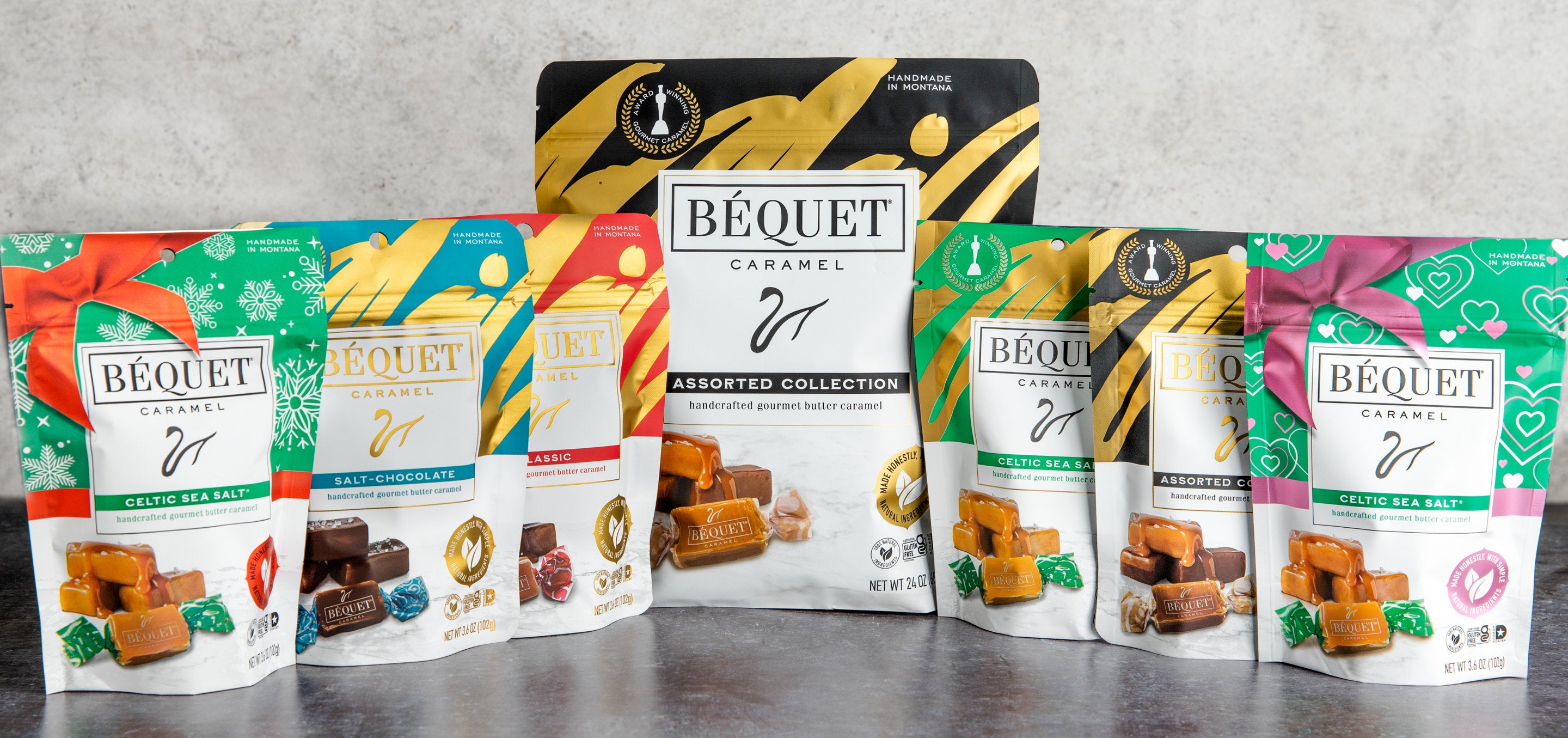
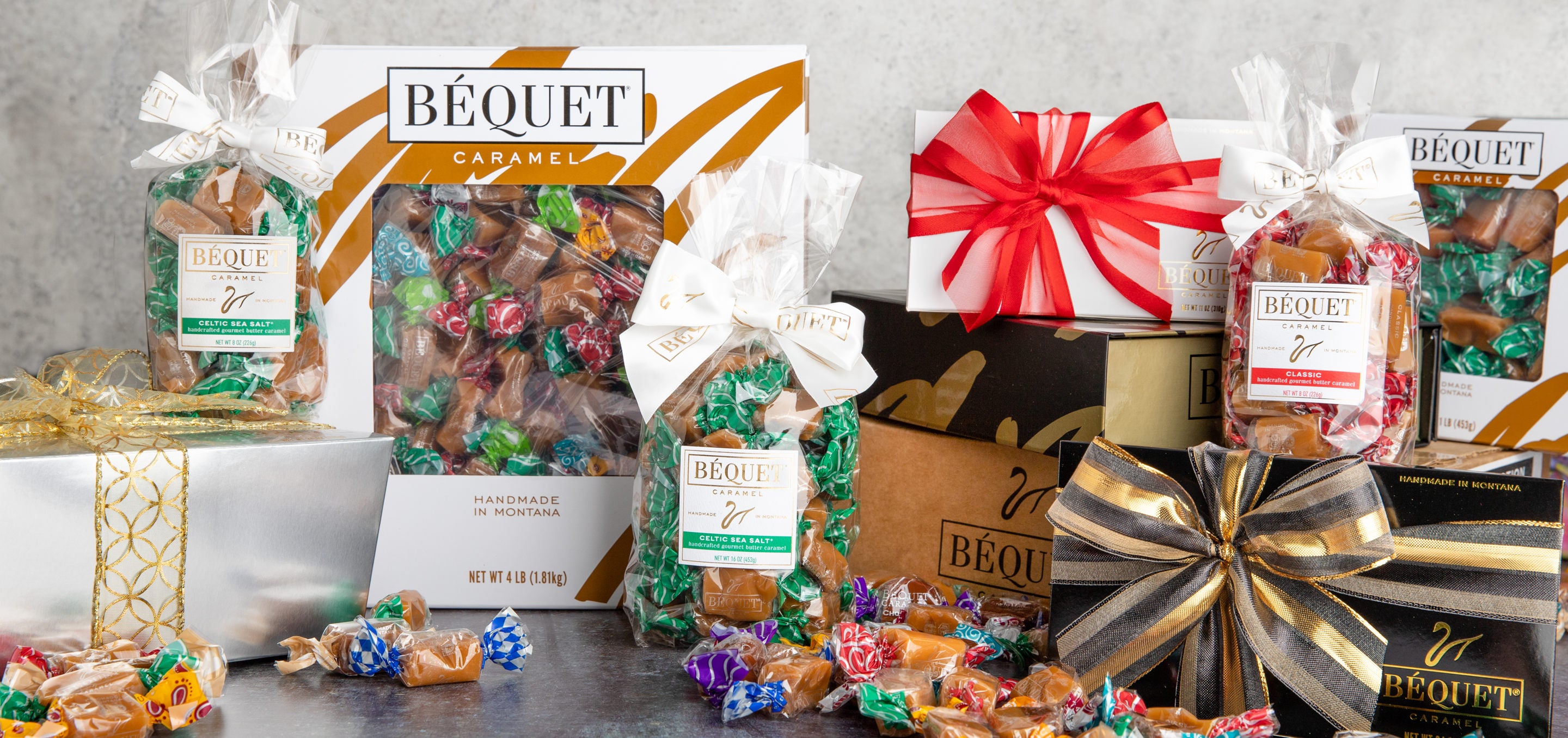
Béquet offers a full range of caramel gift boxes and resealable pouches made with tapioca syrup instead of corn syrup. All varieties ship directly to your door.
3. Are all Béquet caramels made without corn syrup?
Since 2012, every batch of Béquet caramel has been made with tapioca syrup. The caramel also contains no preservatives, no artificial colors, and no artificial flavors. All varieties are certified gluten-free and produced in a nut-free facility.
4. What does tapioca syrup do in caramel that corn syrup cannot?
Tapioca syrup provides a clean, neutral sweetness that supports the caramelization process without adding stickiness or a flat, overly sweet taste. In slow-cooked caramel, that neutral base allows the butter, cream, and brown sugar to develop their full depth of flavor, producing a silkier texture and more balanced bite.
5. Is Béquet caramel safe for people with gluten sensitivities?
Yes. Every variety of Béquet caramel is certified gluten-free and produced in a nut-free facility. The ingredient list is short and transparent, built on tapioca syrup, antibiotic-free dairy, and pure brown sugar with no artificial colors, flavors, or preservatives. You can browse the full range of certified gluten-free caramel on our site.
6. Why did Béquet switch from corn syrup to tapioca syrup?
When customers raised concerns about corn syrup, we tested alternatives and found that tapioca syrup actually produced an even smoother, creamier caramel. The switch happened in 2012 and applied to every variety, from our Celtic Sea Salt® Caramel to our rich butterscotch caramel. The decision was driven by both ingredient quality and taste, and 12 national awards since confirm it was the right call.