





Salt does far more than season a dish. In candy making, the right salt sharpens sweetness, adds texture, and shapes a flavor that lingers.
Choosing among the many types of salt available means understanding how each interacts with sugar, butter, and chocolate.
How Different Types of Salt Affect Candy
Not all salt behaves the same way in confections. Grain size determines how quickly salt dissolves, while mineral content shapes the flavor left behind. A fine-grained salt vanishes into a caramel base, delivering even seasoning. A coarse crystal sits on the surface, offering a bright burst of salinity with every bite.
Moisture matters, too. Wetter salts cling to soft candy, while dry flakes add crunch. Understanding different types of salt is the first step toward choosing well.
Popular Types of Cooking Salt for Candy Makers
Every salt brings a distinct personality to confections. If you enjoy exploring globally inspired sweets like Dubai caramel candy, understanding these salt variations becomes even more valuable. Here are the varieties worth knowing.
Table Salt
Finely ground and widely available, table salt often contains anti-caking agents. The ultra-fine grain dissolves fast, but many confectioners notice a metallic taste that competes with delicate vanilla or butterscotch flavors.
Kosher Salt
A professional kitchen staple, kosher salt has a clean taste with no additives. Larger crystals dissolve evenly in warm caramel, making kosher salt dependable for recipes where salt goes directly into the batch.
Sea Salt
Harvested from evaporated seawater, sea salt comes in fine, medium, and coarse grains. Natural minerals give sea salt a rounder, more complex flavor. As a finishing salt on cookies and salted caramel, sea salt adds visual appeal and satisfying contrast. For those who want to experience this balance in a ready-to-enjoy form, Salted Caramel Candy delivers a perfect harmony of sweet butter caramel and mineral-rich salt in every bite.

Celtic Sea Salt®
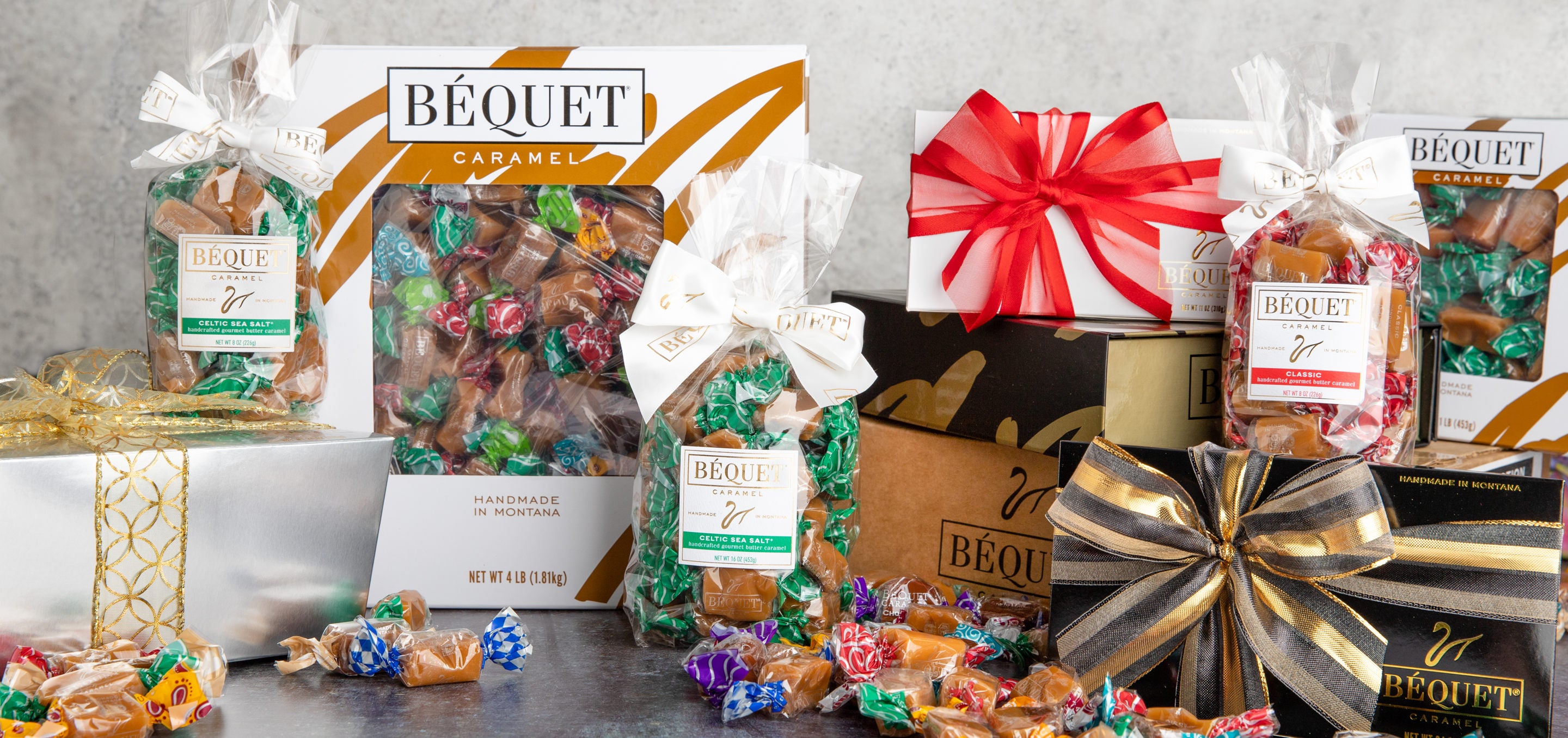
Hand-harvested from clay-lined salt ponds along the coasts of France, Celtic Sea Salt® carries a moist, slightly grey appearance and a rich mineral profile. At Béquet, our Celtic Sea Salt Caramel pairs a vanilla butter caramel with a gentle Celtic Sea Salt® finish that accentuates the buttery flavor.
Fleur de Sel
Often called the finest finishing salt, fleur de sel is hand-skimmed from salt ponds in Brittany, France. Delicate crystals dissolve slowly on the tongue, releasing small bursts of salinity, a beautiful match for dark chocolate caramel.
Himalayan Pink Salt
Mined from ancient deposits in Pakistan, Himalayan pink salt offers a mild flavor and distinctive color. Large crystals work best as a decorative garnish on lighter candies rather than a base ingredient.
Smoked Salt
Made by smoking sea salt over wood, smoked salt adds layered, savory depth. A pinch on a mocha-flavored caramel or dark chocolate truffle creates a memorable warmth.
Salt Varieties Explained in a Quick Comparison
|
Salt Type |
Best Use in Candy |
Grain Size |
Flavor Notes |
|
Table Salt |
Dissolving into batters |
Very fine |
Clean, slightly metallic |
|
Kosher Salt |
Mixing into caramel bases |
Coarse |
Pure, neutral |
|
Sea Salt |
Finishing and topping |
Fine to coarse |
Mineral-rich, rounded |
|
Celtic Sea Salt® |
Finishing butter caramels |
Moist, medium |
Complex, earthy |
|
Fleur de Sel |
Finishing chocolates |
Delicate flakes |
Subtle, briny |
|
Himalayan Pink |
Decorative garnish |
Coarse crystals |
Mild, clean |
|
Smoked Salt |
Finishing dark chocolate |
Varies |
Smoky, warm |
How to Match the Right Salt to Your Candy
A few guidelines simplify the decision:
-
Mixing into a candy base: Choose fine-grained salts like kosher or fine sea salt that dissolve completely.
-
Finishing caramels and chocolates: Reach for Celtic Sea Salt® or fleur de sel, moist salts that sit on the surface and deliver controlled flavor.
-
Visual impact: Himalayan pink salt or coarse sea salt flakes add color and texture to lighter confections.
-
Depth and complexity: smoked salt or mineral-rich sea salt varieties layer flavor into butterscotch caramel or dark chocolate.
Avoid iodized table salt for finishing. The fine grain dissolves too quickly and can leave a metallic taste.
Get the Pinch Right
Choosing salt for candy is a small decision that makes a big difference. Grain size, mineral content, and moisture all shape how a confection tastes.
Once you notice how each salt variety interacts with sugar, butter, and chocolate, the choices become intuitive, and the results genuinely satisfying.
Shop premium salted caramels at Béquet Confections today!
Frequently Asked Questions
1. What is the best salt for salted caramel?
Moist finishing salts like Celtic Sea Salt® and fleur de sel are the top choices. Béquet's award-winning Celtic Sea Salt® Caramel uses Celtic Sea Salt® to accent buttery richness with balanced salinity.
2. Can you use regular table salt in candy?
Table salt works when fully dissolved into a mixture, but metallic notes make it a poor choice for finishing. Kosher or fine sea salt delivers a cleaner result.
3. Why do confectioners prefer sea salt over table salt?
Sea salt retains natural minerals that add depth and complexity. Varied grain sizes give confectioners more control over texture, which is why most types of cooking salt in professional candy kitchens are sea salt-based.
4. Does salt type affect the texture of caramel?
Yes. Fine salts dissolve into the caramel base and influence the overall balance of sweetness without changing the mouthfeel. Coarse or flaky salts like Celtic Sea Salt® remain on the surface, adding a light crunch and a controlled burst of salinity that contrasts with the soft, buttery center of a well-made gourmet caramel.
5. How much salt should you add to candy?
A small amount goes a long way. Most salted caramel recipes call for roughly half a teaspoon of finishing salt per batch, though the exact quantity depends on grain size and mineral density. Coarser salts like Celtic Sea Salt® deliver more flavor per crystal, so starting with less and adjusting to taste is always the safer approach.
6. Can you mix different salt varieties in one candy recipe?
Absolutely. Many confectioners use a fine sea salt or kosher salt dissolved into the base for even seasoning, then finish with a flaky or moist salt like fleur de sel or Celtic Sea Salt® on top.