



The Core Difference Between Soft and Chewy Caramels
The difference between soft and chewy caramels comes down to two tightly linked factors: cooking temperature and dairy content. Small changes in either create dramatically different textures.
Temperature Sets the Foundation
Soft caramels cook to 245-249°F with generous dairy, while chewy varieties reach 265-275°F with less dairy. This divergence explains why some dissolve immediately while others reward intentional chewing.
Dairy Content Seals the Outcome
Béquet’s approach as a Montana caramel company ensures every batch reflects precise temperature control and ingredient balance.
Temperature's Critical Role in Caramel Texture
Precision thermometry reveals why soft and chewy caramels diverge so dramatically during cooking.
Soft Caramels Stay Cool and Moist
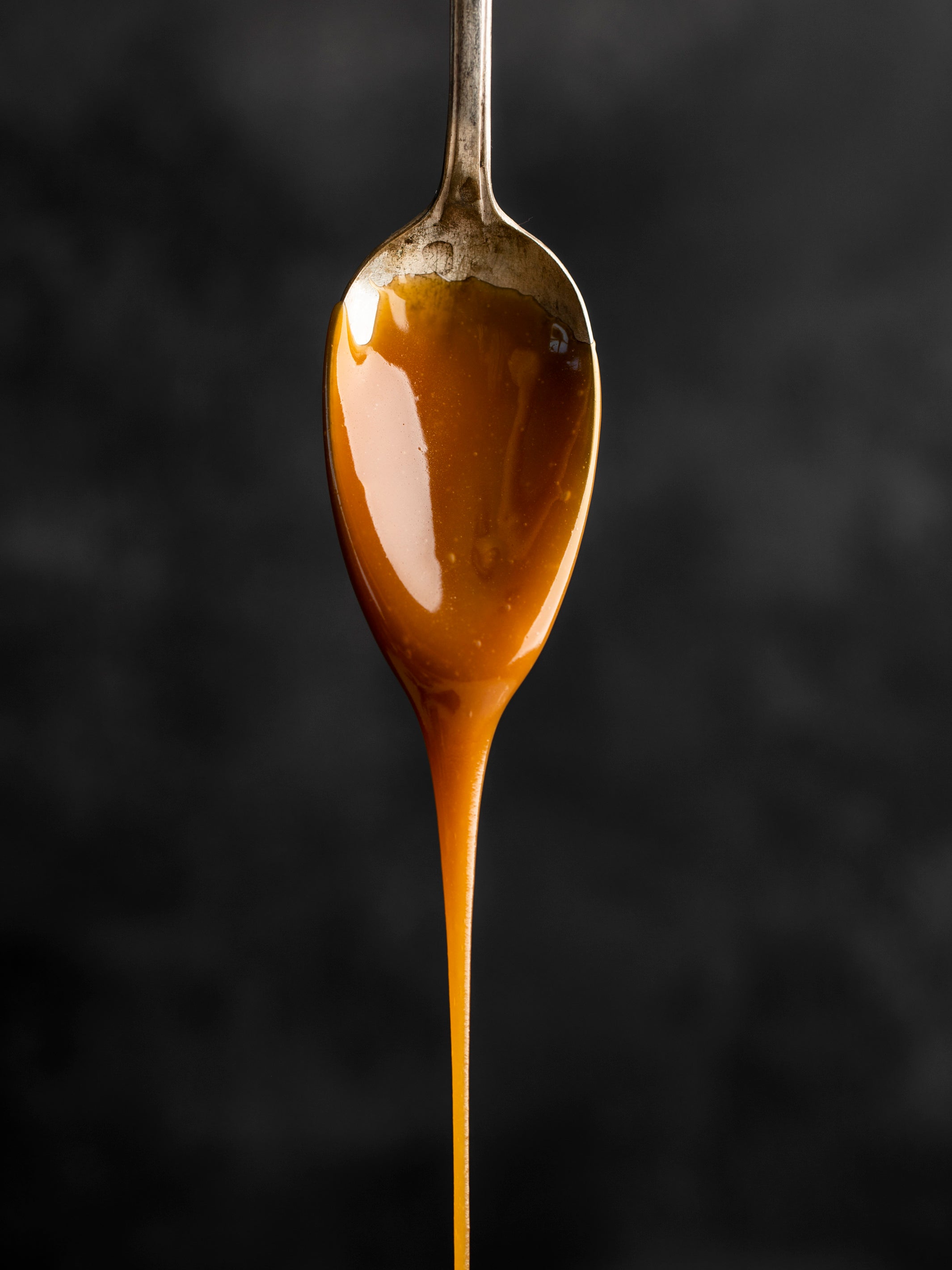
Soft caramels rarely exceed 250°F, where sugar syrup retains enough moisture for that melt-in-your-mouth quality. The mixture hasn't fully evaporated, keeping the final candy pliable. Flavor floods your palate almost instantly.
Chewy Caramels Push Hotter for Structure
Chewy caramels reach 265-275°F, driving off additional moisture while maintaining flexibility. This range requires precision but produces caramels that hold their shape yet yield to pressure. Our caramel variety exemplifies this balance, cooked firmer while preserving a buttery texture.
How Dairy Transforms the Final Product
Cream and butter do more than add richness. They fundamentally change caramel’s internal structure.
The Fat Breaks Sugar Bonds
When cool dairy enters hot sugar syrup, it halts cooking immediately. The fat coats sugar crystals, preventing tight bonding, which explains why more dairy produces softer candies. Soft caramels use higher cream-to-sugar ratios, creating loose structures that collapse easily.
Béquet's Dairy Balance Defines Texture
Chewy caramels use less dairy, allowing crystals to pack densely, creating satisfying resistance. This balance delivers specific sensory experiences through precise ingredient ratios.
Sensory Experience and Personal Preference
Texture changes how flavor is perceived.
Soft Caramels Deliver Immediate Indulgence
Soft caramels appeal to those seeking immediate dissolution with minimal chewing. Butter and dairy notes dominate, flooding your palate with creamy vanilla-forward flavor. Flavors hit all at once.
Chewy Caramels Reward Your Engagement
Chewy caramels reward sustained engagement differently. Your teeth meet resistance, then the candy gradually softens. You taste full complexity across several seconds as layers emerge sequentially.

Soft Caramels vs Chewy Caramels at a Glance
|
Attribute |
Soft Caramels |
Chewy Caramels |
|
Cooking Temperature |
245-250°F |
265-275°F |
|
Dairy Content |
Higher (more cream) |
Moderate (controlled cream) |
|
Moisture Retention |
High |
Lower |
|
Dissolution Speed |
Fast (3-5 seconds) |
Moderate (5-10 seconds) |
|
Crystal Structure |
Loose, open |
Denser, packed |
|
Chewing Required |
Minimal |
Intentional |
|
Best Flavor Profile |
Immediate creaminess |
Layered complexity |
Caramel Storage and Longevity
Both textures behave differently when exposed to environmental conditions.
Managing Moisture and Humidity
Soft caramels absorb environmental humidity, becoming stickier over time. Chewy varieties hold structure more consistently. Wrapped in wax paper at room temperature, both keep for two to three weeks. Béquet's individually wrapped caramels protect both textures perfectly.
Why Wrapping Matters for Texture
Individual wrapping creates a moisture barrier, preventing soft caramels from absorbing humidity that changes their feel. Chewy varieties benefit too, maintaining their structured chew throughout storage.
Soft vs Chewy Caramel: Which Should You Choose?
There is no objectively better caramel. There is only the experience you want.
For Pure Comfort, Choose Soft
Soft caramels suit moments requiring pure indulgence without effort. They're perfect for gifting or enjoying while focused elsewhere.
For Deeper Satisfaction, Choose Chewy
Chewy caramels reward sustained attention with extended pleasure and fuller flavor. Many keep both on hand, selecting based on mood. A soft caramel pairs beautifully with afternoon coffee, while a chewy piece becomes an evening ritual. Béquet's craftsmanship reflects Montana-made quality that separates us from mass-produced alternatives.
The Texture That Matches Your Taste
Whether you're drawn to soft caramel’s immediate luxury or chewy's rewarding engagement, Béquet crafts both with precision that shows in every bite.
The thermometer doesn't lie, and neither do the dairy ratios. The best caramel isn't the softest or chewiest; it's simply the one that aligns with how you want to savor it.
Béquet also offers gluten-free caramels, ensuring that everyone can enjoy our premium, handcrafted treats.
Frequently Asked Questions
1. Can you adjust the homemade caramel texture during cooking?
Yes. Temperature and dairy content are your primary controls. Keep a reliable candy thermometer handy. Even 5 degrees difference affects the final texture noticeably.
2. Why does my chewy caramel sometimes feel sticky?
Higher humidity pulls moisture into the candy. Store wrapped caramels in an airtight container in a cool, dry space. Béquet's individually wrapped caramels are protected through our packaging.
3. Does the type of dairy matter for caramel texture?
Absolutely. Heavy cream produces different results than light cream or milk. Fat content directly influences how tightly sugar crystals bond. Béquet uses antibiotic-free dairy sourced to deliver a consistent texture.
4. Can soft caramels become chewy if stored incorrectly?
Soft caramels can firm up slightly in dry conditions, but won't achieve a true chewy texture without recooking. Chewy caramels may soften slightly in humid environments, but resist major shifts better.
5. How do I know if my caramel is cooked correctly?
Use a reliable candy thermometer. Soft caramels should reach 245–250°F, chewy caramels 265–275°F. Béquet’s small-batch process ensures consistency every time.
6. What makes a caramel melt-in-your-mouth soft?
Melt-in-mouth softness comes from precise cooking temperature, high dairy fat content, and slow heat application - the method Béquet uses in every Montana-made batch.
7. What is the difference between chewy and creamy caramels?
Chewy caramels have lower moisture and higher sugar crystallisation; creamy caramels have higher cream ratios and lower cook temperatures.
8. How do you identify a high-quality caramel for a luxurious treat?
Look for all-natural ingredients, antibiotic-free dairy, and small-batch production.
9. What is the difference between soft and chewy caramels for dessert platters?
Soft caramels work better on dessert platters where guests want immediate, no-effort indulgence - they melt within seconds and pair cleanly with coffee or wine. Chewy caramels hold their shape longer at room temperature, making them easier to handle and plate. For mixed platters, both textures add contrast; Béquet offers distinct varieties so you can build either experience intentionally.
10. Which Béquet caramels are softest?
Béquet's classic and Celtic Salt varieties are among the softest in the line, cooked to the lower end of the soft-caramel temperature range (245–249°F) with a higher cream ratio. They dissolve within a few seconds and deliver immediate buttery, creamy flavor without any resistance.
11. How is handmade caramel different from factory-produced caramel in texture?
Factory caramel is cooked at scale with approximate temperature control, which leads to inconsistent moisture loss and a firmer, often waxy result. Handmade small-batch caramel - like Béquet's Montana-made process - allows precise thermometry and dairy ratios per batch, producing a consistently softer, cleaner melt that factory lines can't reliably replicate.
People Also Search For -
Thank You Gifts | Wedding Favors & Gifts | Housewarming Gifts | Birthday Gifts | Chocolate lover gifts | Employee appreciation gifts | Gifts for Her | Gifts for Him | Gifts for Mom | Gifts for Coworkers | Valentine's day gifts