




Making caramel sauce teaches patience. Sugar shifts from clear to golden amber in moments, and the difference between a silky sauce and a scorched pan comes down to attentiveness and heat control.
By using the dry caramel method, you take control rather than leaving results to chance. Melting the sugar evenly allows it to caramelize to perfection, producing a sauce that’s rich, balanced, and far better than most store-bought versions.
The Dry Caramel Method to Prevent Burning and Crystallization
Unlike the wet method, dry caramel uses no water. Sugar is melted directly over steady heat until it liquefies and caramelizes. Because stirring is encouraged as the sugar melts, you stay in control of the process rather than reacting to it.
The result is smoother caramel, more even browning, and far fewer surprises along the way.
Key Advantages Over the Wet Method
- Wet caramel requires careful swirling without stirring, limiting visibility and control as the sugar cooks.
- The wet method is highly time and temperature-sensitive, which can make the process feel stressful and unpredictable.
- Dry caramel removes that uncertainty by allowing you to stir as the sugar melts.
- Stirring helps the sugar melt evenly and caramelize at a consistent rate.
- The result is smoother caramel and the ability to stop cooking exactly at that perfect moment of golden brown.
Step-by-Step Dry Caramel Method to Make Caramel Sauce
Perfect caramel sauce can be achieved by following nine simple steps.
Step 1: Add Sugar to Pan
Place granulated sugar in a light-colored stainless steel saucepan over medium heat. Don't stir yet.
Step 2: Wait for Melting to Begin
After 3-4 minutes, sugar crystals at the pan's edges will start liquefying. This is your signal to begin stirring.
Step 3: Stir Continuously
Once melting starts, stir constantly over medium heat. Sugar will clump initially, but this isn't crystallization; it's unmelted crystals mixing with melted sugar. Continue for 5-7 minutes total.
Step 4: Reach Amber Color
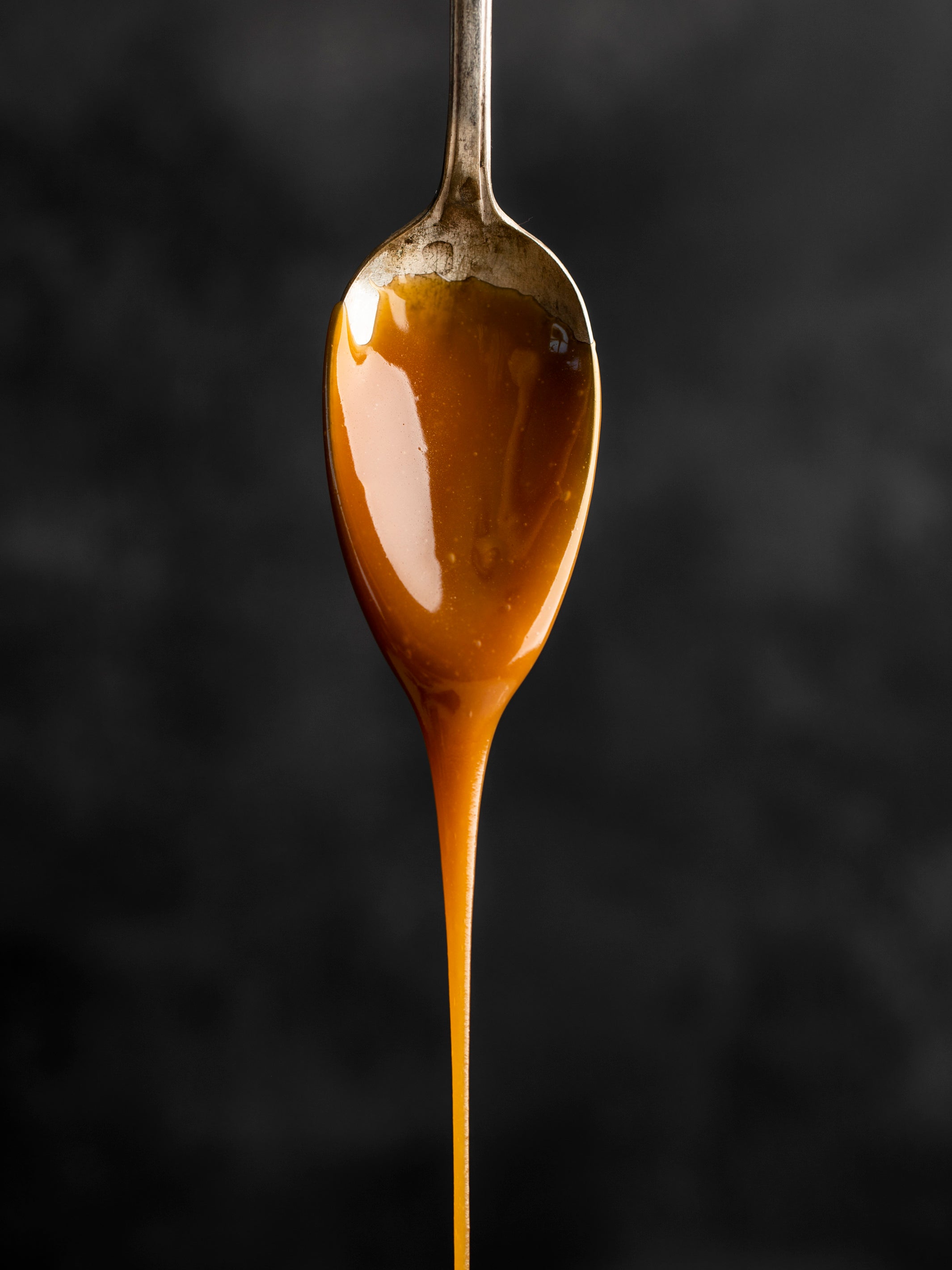
At this stage, the color deepens quickly. What looks perfect one moment can turn too dark the next. Keep stirring until all sugar crystals dissolve and the caramel reaches a warm, light-to-medium amber. Remove from heat when it matches your flavor preference. Lighter for subtle sweetness, darker for deeper, slightly bitter notes.
Step 5: Turn Off Heat and Add Butter
Remove the pan from the heat immediately upon reaching the desired color. Add cubed unsalted butter and stir until completely melted. The mixture will bubble noticeably, which is normal.
Step 6: Cook Briefly
Cook the butter-sugar mixture for another 30 seconds with constant stirring. It should develop a foamy appearance.
Step 7: Add Cream Slowly
Pour room-temperature heavy cream in slowly while stirring constantly. Significant bubbling occurs due to moisture reacting with the hot caramel. This is expected.
Step 8: Finish with Salt
Stir constantly for 30-60 seconds, then remove from heat. Add sea salt and stir thoroughly to combine.
Step 9: Cool and Adjust
Allow the caramel to cool slightly. If too thin, cook 2-3 minutes longer; if too thick, add 1-2 tablespoons cream while warm.
Four Essential Ingredients Needed for Caramel Sauce
Despite its depth of flavor, caramel sauce is built from only four ingredients, each contributing something essential to the final result.
|
Ingredient |
Role |
Why It Matters |
|
Granulated Sugar |
Base for caramelization |
Melts evenly when stirred |
|
Unsalted Butter |
Adds richness |
Lets you adjust saltiness |
|
Heavy Cream |
Creates silky consistency |
Prevents splitting |
|
Sea Salt |
Enhances flavor |
Brings out depth |
Critical Techniques to Avoid Burning
Keep the following pointers in mind to avoid burning:
-
Use the right pan: Light-colored stainless steel lets you track color accurately. Dark pans hide the caramel's true color.
-
Monitor heat: Medium heat prevents rapid transitions. If your stove runs hot, start on medium-low. Sugar goes from perfect to burnt in seconds.
-
Stir constantly: Stirring prevents hot spots and ensures even caramelization.
-
Use heatproof utensils: A wooden spoon or silicone spatula protects against burns from splattering.
-
Keep cream at room temperature: Greater temperature differences cause more violent bubbling.
-
Check color only: Don't rely on smell or consistency before cooling. Hot caramel is always runny.
How to Fix Separated or Grainy Caramel?
Caramel mishaps are salvageable. Most separation and crystallization issues can be corrected with simple adjustments, allowing you to rescue your batch and achieve the right consistency.
Rescue Seized or Separated Caramel
-
Remove from heat immediately and let the mixture cool for 5 minutes.
-
Return to low heat and whisk in a tablespoon of water to reintegrate separated ingredients.
-
Pour through a fine mesh strainer to remove any remaining sugar crystals, ensuring a smooth final sauce.
Adjust Thickness to Preference
-
Too runny? Return to medium heat and cook 2-3 minutes longer to evaporate excess moisture and thicken the caramel.
-
Too thick? Stir in 1-2 tablespoons heavy cream while the caramel is still warm until you reach the desired consistency.
The Béquet Caramel Advantage
If you want to skip the fuss of making your own caramel sauce and are considering readymade options, Béquet's Sea Salt Caramel Sauce delivers smooth, buttery results without effort.

Made with tapioca syrup instead of corn syrup, our caramel sauce uses all-natural ingredients with no preservatives. If you want refined flavor without the 15-minute stovetop commitment, gourmet caramel offers both consistency and quality that rivals homemade.
Caramel Made Simple
Watching sugar transform under steady heat is part of what makes caramel so satisfying. With practice, it becomes less about following steps and more about noticing the cues: the color, the texture, the aroma. That awareness is what turns ordinary caramel into something truly smooth, balanced, and unforgettable.
And if you are seeking café-quality caramel without the extra effort, Béquet Confections delivers smooth, ready-to-use, buttery results that are just as good, and most likely, even better.
Frequently Asked Questions
1. Do I need a candy thermometer?
No. Color observation is more reliable than temperature readings for determining doneness for caramel sauces.
2. How long does homemade caramel last?
Store in an airtight refrigerator container for up to 3 weeks. It firms when cold and needs reheating before use.
3. Can I freeze caramel sauce?
Yes. Freeze in an airtight container for up to 3 months. Thaw in the refrigerator overnight, then reheat gently.
4. Why Does Sugar Burn So Quickly When Making Caramel Sauce?
Sugar caramelizes exponentially once heating begins. The transition from perfect amber to burnt happens in 30-60 seconds because the Maillard reaction accelerates dramatically around 320°F (160°C).
5. What Is the Safest Heat Level to Prevent Sugar from Burning?
Medium heat (or medium-low on hot stoves) allows gradual caramelization, giving you time to catch the perfect color before burning.