



When shopping for caramel, you'll encounter two distinct categories. One relies on granulated sugar and controlled heat to develop flavor. The other uses sugar substitutes to reduce calories or limit the blood sugar impact.
Understanding how these approaches differ helps you choose the caramel that aligns with your priorities, whether that’s flavor, texture, or dietary needs.
The Core Difference Between Sugar-Free and Traditional Caramel
Traditional caramel is made by heating granulated sugar, often with corn syrup, cream, and butter. As sugar cooks, it undergoes caramelization and Maillard reactions that create deep, layered flavor compounds.
Sugar-free caramel replaces sugar with alternatives such as erythritol, xylitol, allulose, or stevia. These sweeteners behave differently under heat and do not caramelize in the same way. That difference shapes everything that follows, including flavor, texture, and digestion.
How Flavor and Texture Compare
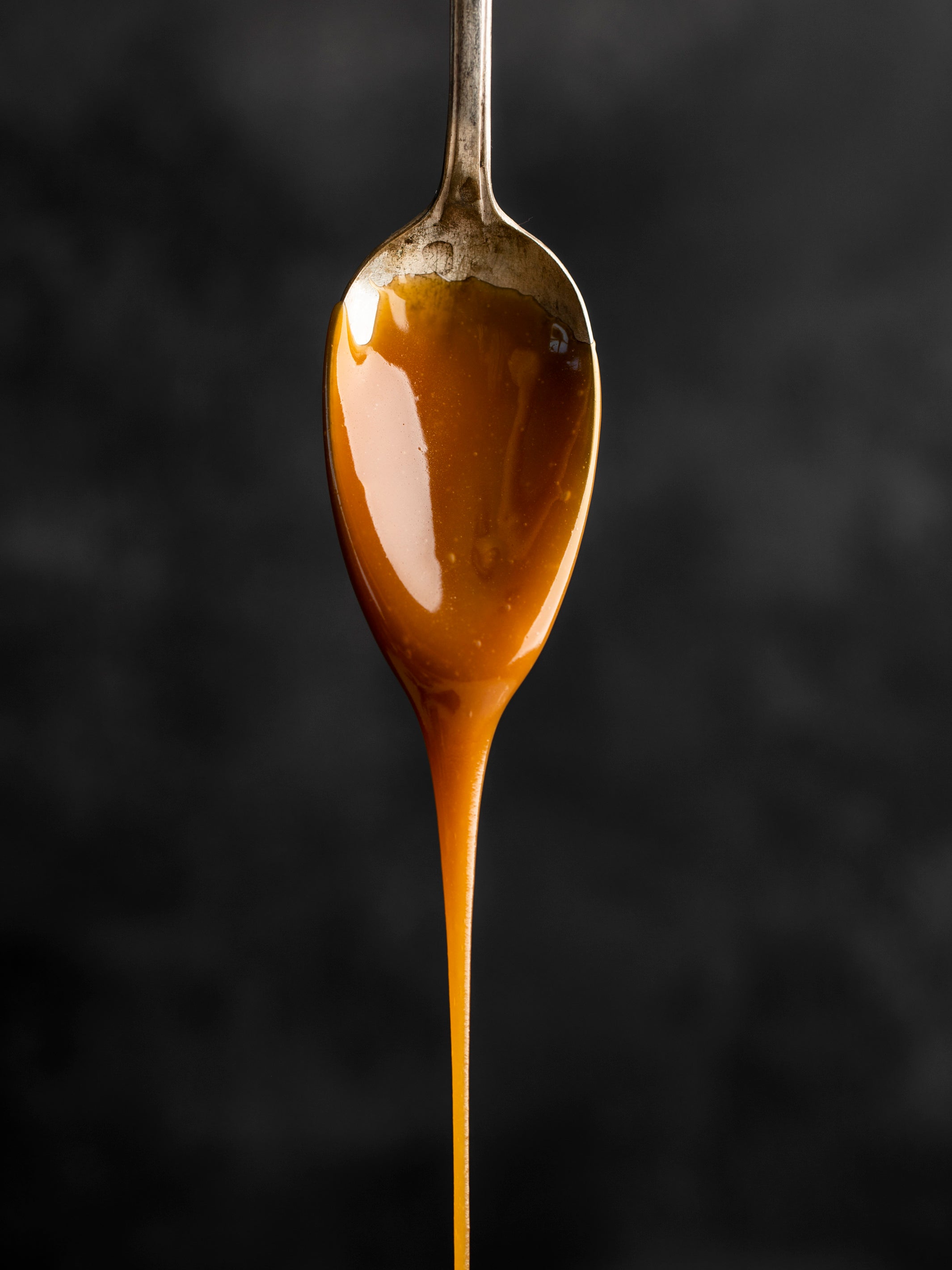
Traditional caramel delivers an authentic sensory experience. When sugar heats to the caramelization stage, it produces hundreds of flavor compounds, creating that deep, complex, buttery richness. The texture is creamy and smooth with a satisfying pull that releases flavor gradually.
Our Classic Caramel showcases this authenticity. The melt-in-your-mouth texture comes from caramelization itself, not additives replicating it.

Sugar-free caramel lacks the depth of true caramelization. Some consumers report a different aftertaste, sometimes metallic or chemical. Xylitol can leave a cooling sensation. Erythritol may carry a faint bitter note. The texture often feels slightly less creamy than traditional caramel.
Understanding Sugar Substitutes and Their Trade-offs
Sugar-free caramels rely on sweetening agents that don't raise blood glucose levels:
- Erythritol tastes nearly identical to sugar with minimal aftertaste. However, it doesn't brown or caramelize like sugar.
- Xylitol feeds oral bacteria far less readily than sugar but has a higher calorie content.
- Allulose caramelizes better than erythritol but costs more and has less research.
- Stevia is plant-derived and zero-calorie but carries a distinct aftertaste. None replicates sugar perfectly.
How Sugar-Free Caramel Is Actually Made
Caramel forms when sugar undergoes caramelization — a chemical reaction that begins around 320°F and produces hundreds of distinct flavor compounds, including diacetyl, furans, and maltol. Traditional granulated sugar caramelizes predictably and creates that signature amber color and deep, layered flavor. Sugar-free substitutes behave differently because most are not reducing sugars and do not undergo true caramelization.
Allulose is the closest functional match. It caramelizes at approximately 300°F, produces a pourable syrup that does not crystallize at room temperature, and delivers color and flavor closest to traditional caramel. Erythritol does not caramelize - it re-crystallizes as it cools, resulting in a gritty or grainy texture. Xylitol and stevia also fail to caramelize in the conventional sense; both require fat and cream as a base to achieve any caramel-like consistency. For a soft, chewy sugar-free caramel candy - the kind made by a confectioner - allulose or an allulose-erythritol blend with additional cream fat is the most reliable starting point, though texture will still differ from traditional pulled caramel.
Sugar-Free Caramel as a Syrup
Sugar-free caramel syrup follows the same substitution logic as caramel candy: conventional sugar is replaced by a zero- or low-glycemic sweetener. For a pourable syrup texture, allulose is the most reliable choice because it dissolves without crystallizing at room temperature. Erythritol-based syrups tend to turn gritty as they cool. A standard sugar-free caramel syrup contains butter, heavy cream, and allulose — roughly 1 net carb per two-tablespoon serving. Common uses include coffee drinks, ice cream toppings, and baking applications where traditional caramel sauce would otherwise spike blood glucose.
Health Considerations Beyond Calorie Counts
Traditional caramel contains roughly 40-50 calories per piece, while sugar-free alternatives contain roughly 20-30. Traditional caramel made with all-natural ingredients provides genuine sensory satisfaction. A single piece often satisfies more completely than multiple pieces of mediocre alternatives.
Blood sugar impact is real for diabetics. Sugar-free caramel curbs this concern, while traditional caramel can cause noticeable glucose elevation.
Digestive effects vary by sweetener. Xylitol can cause bloating. Traditional caramel rarely has digestive complications.
Dental health is the one clear advantage of sugar-free caramel. Oral bacteria cannot ferment sugar alcohols efficiently, so sugar-free options don't contribute to cavity formation as traditional caramel does.
|
Feature |
Traditional Caramel |
Sugar-Free Caramel |
|
Primary Sweetener |
Granulated sugar and corn syrup |
Erythritol, xylitol, stevia, and allulose |
|
Calorie Content |
40-50 per piece |
20-30 per piece |
|
Flavor Complexity |
Deep, rich, multi-layered |
Good but less complex |
|
Texture |
Creamy, satisfying pull |
Slightly less creamy |
|
Blood Sugar Impact |
Significant increase |
Negligible or none |
|
Dental Health |
Feeds cavity-forming bacteria |
Generally safe |
|
Authentic Caramelization |
Yes |
Limited |
The Case for Authentic Caramel
Sugar-free options serve people managing glucose levels or reducing calories. However, traditional caramel offers an authentic sensory experience rooted in real chemistry.
Our Salted Butterscotch and Salted Mocha caramels demonstrate this. Real sugar allows the butter, salt, and flavor notes to develop fully. You taste caramel made with care, not chemistry, trying to approximate it.

The choice isn't about one being better, but choosing what aligns with your priorities. If you want an authentic flavor, traditional caramel is worth it. If blood sugar management is essential, sugar-free makes sense.
Know what you're getting.
Frequently Asked Questions
1. Does sugar-free caramel taste like traditional caramel?
Sugar-free versions approximate the taste but lack the depth of true caramelization.
2. Is traditional caramel bad for my teeth?
Traditional caramel can feed oral bacteria that can cause decay. Regular consumption requires stronger dental hygiene.
3. Which is healthier, between sugar-free and traditional caramel?
If you have diabetes, sugar-free is clearly superior. For others, focus on ingredient quality and portion control.
4. Why does traditional caramel feel more satisfying?
Authentic caramelization creates hundreds of flavor compounds. Your palate recognizes this complexity as sophisticated.
5. How does sugar-free caramel work?
Sugar-free caramel replaces granulated sugar with sweeteners such as allulose, erythritol, or xylitol that do not trigger the same Maillard and caramelization reactions, producing a caramel-like texture and sweetness without raising blood glucose.
6. Can caramel be sugar free?
Yes. Caramel can be made sugar-free by substituting conventional sugar with alternatives like allulose, erythritol, or stevia. The result approximates traditional caramel flavor and texture but lacks the depth of full caramelization.
7. Is caramel just sugar?
Traditional caramel starts with sugar, but heat converts it into hundreds of distinct flavor compounds through caramelization. Cream and butter are then added for texture. Sugar is the starting point, not the finished product.
8. Does stevia caramelize when heated?
No. Stevia does not caramelize when heated. It is not a carbohydrate sugar, so it produces no amber color or Maillard flavor compounds. It can sweeten a cream-and-butter base, but the result is a flavored sauce, not caramel.